
Veloura Stories
← Library
From the Same Mould
Emotional·Free in full

From the Same Mould

As Adwoa matches beads for four necklaces, her daughter Esi announces she has taken a sign-painting job in Accra.

Chapters · 49 minFully narrated

About the story

In a small workshop near Odumase-Krobo, Adwoa Afriyie is making four matching necklaces for a customer. The last beads from the kiln are less alike in colour than she expected, and there is little time left before delivery. As her daughter Esi sorts the beads, she says she has accepted a paid sign-painting job in Accra and will leave once the order is delivered. Adwoa thinks of the empty place at the workbench where they have worked side by side for years. She must keep her promise to the customer while learning not to see Esi's choice of another trade as a judgment on her own work. Their conversation is harder to sort through than the colours of the beads.

Theme · Glass beads in four trays bring into view the new trade chosen by a daughter preparing to leave her mother's workshop.

Chapter 1

The Day the Glass Beads Were Sorted

Listen

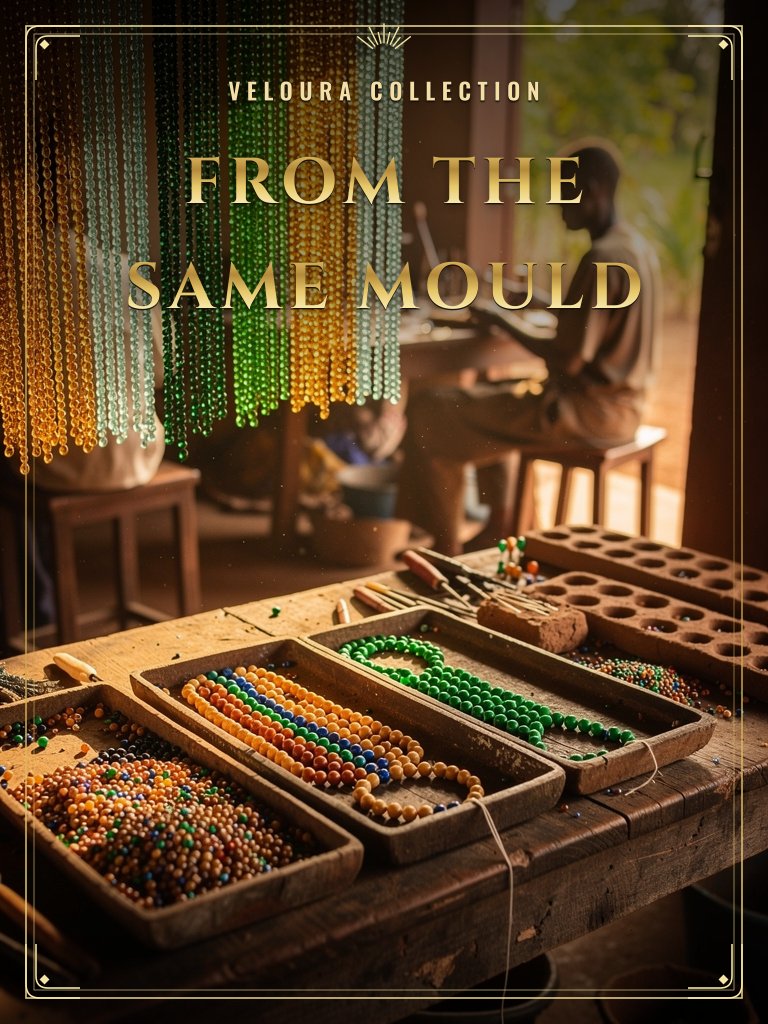
The door of the workshop near Odumase-Krobo stood open despite the heat. Adwoa Afriyie poured into her palm glass beads that had been taken from the kiln and cooled. For years she had sorted these pieces, made from broken glass and fired in clay moulds, by eye. This time the four necklaces had to look alike. The customer would come on the afternoon of the third day.

Adwoa set the lightest pieces to one side and the darkest to another. The gaps in the middle of the four trays refused to close. Then she distributed the beads among the trays on the table. Her daughter Esi sat opposite her, placing those that looked similar next to one another. There were old paint stains on the apron over her pale green shirt. The lettering on the workshop's roadside sales stand had always been Esi's work too.

“I've accepted the sign-painting job in Accra,” Esi said.

Adwoa dropped the bead in her hand into the third tray. She chose another. Both of them looked at the table until the sound of a passing car faded away.

“It's paid work. I'll leave once the order has been delivered,” Esi added.

Adwoa held a bluish bead up to the light. Its shade seemed to change in front of the window; she put it back. The place her daughter had named was not far away, but she would no longer be across the table every morning. Instead of saying what she was thinking, Adwoa pulled the four trays into line.

“How long have you been talking to them?”

“Since last week. It was settled yesterday.”

Esi's voice was calm. Adwoa knew she loved painting; she liked the lettering on the stand too. Even so, she had always regarded the paint-stained apron as a second one, taken out only when the beadwork was done. Esi held out the tray beside her.

“Are these close to the others?”

Adwoa looked and nodded. They were close, not identical. She put the tray on the table, then looked at the stool where her daughter sat every day.

“Who will sit at this bench when you leave?” she asked.

Esi slowly put the beads in her hand into the tray. Before answering, she turned to the empty place her mother was looking at.

Chapter 2

The Distance Between Shades

Listen

Esi looked at the stool, then turned to her mother.

“I don't know. You could find someone to work here.”

“Do you think it's easy to find someone who knows this table?”

Adwoa carried one of the trays to the window. In the sunlight the differences in the beads' shades became clearer. They had come from the same moulds, yet among the last batch fired, light and dark pieces lay side by side. There were not enough beads close in colour to string four necklaces in matching shades. Esi took the empty cords and laid them in front of the trays. Beside each one was a space of equal length waiting to be filled.

“I'll make a new batch,” Adwoa said.

Esi pointed to the tray in front of her.

“You'll have to wait for it to cool too. They're coming the afternoon after tomorrow.”

Adwoa looked at the clay moulds beside the kiln. She might not have enough time; she was mindful of her promise to the customer too.

“We don't have to string all four exactly alike. We could put those dark ones in the middle of one and at the ends of another. The colours will look related,” Esi said.

“The customer asked for four matching necklaces.”

“Matching doesn't mean identical.”

Adwoa set the tray down hard on the table. Several beads rolled towards the edge. Esi caught them in her palm before they fell.

“It's easy for you to change everything. I taught you how we sort these. I thought one day you'd stand here in my place,” Adwoa said.

Esi opened her hand. Four beads lay side by side, none quite the same colour as the others.

“I love what you taught me. But I never said I'd take over the workshop.”

Adwoa could find no answer. She remembered the days her daughter painted: Esi would first put away the beads, then open her paint box. The order had seemed natural to Adwoa. For Esi, it might have been the moment the real work of the day began.

Esi placed the four beads from her hand in separate trays.

“We can start a new batch if you like,” she said.

Adwoa did not move the moulds. She still did not know what she would offer the customer; but now both of them were silent before the four trays.

Chapter 3

A New Arrangement of Colours

Listen

The next morning Esi was putting her paintbrushes into a cloth bag. The four trays on the table had remained untouched overnight. Adwoa picked them up one by one and carried them over to her daughter. She sat on the vacant stool first; Esi remained standing.

“Yesterday I snapped at you over the necklaces. What I'm really afraid of is seeing no one here in the morning,” Adwoa said.

Esi left the bag open.

“Even if I'm not here, I can still visit. But I can't sit at this table every day.”

Adwoa set the four trays between them.

“Will you show me the arrangement you had in mind?”

Esi left the brushes in the bag and sat down. First she separated the light beads from all the trays. They set aside the same number for each necklace, but varied the positions of the darker shades. In one, they were grouped in the middle; in another, spread towards the ends. In the other two necklaces the dark pieces were spaced out, but their arrangements were different. Adwoa looked at the four rows she had placed side by side. They were not copies of one another; it was clear they had come from the same table.

“That gap there is too wide,” Adwoa said.

Esi moved a bead. Adwoa did the same in a different place on the next row. Together they threaded the cords and secured the knots. By noon the four necklaces were ready on the table. Adwoa tested each knot with a tug. None came loose. Then she laid the necklaces side by side and turned them towards the light from the door; the differences in shade were not hidden.

Adwoa picked up the phone. She told the customer that the shades were not as close as they had first thought, so they had made four different arrangements. She added that she could make a new set if the customer didn't like them, but it would take extra time.

The person on the phone said they would not decide until they had held and seen the necklaces. They would come at the agreed time. Adwoa hung up and placed the four necklaces in separate trays.

“Let them stay here until the customer comes,” she said.

Esi closed her bag, but put it under the bench. It was not yet time to leave. Adwoa looked at her and opened the window a little wider. Warm air came in; the glass on the table gleamed again in the daylight.

Chapter 4

Under the New Sign

Listen

On the afternoon of the third day, the customer came to the roadside sales stand. Adwoa laid the four necklaces side by side on a light-coloured cloth. The customer lifted each one in turn; as they ran the beads through their fingers, Esi stood on the other side of the stand. Adwoa opened her mouth to speak, then waited. She had already said on the phone that the shades were different.

“All four look like part of the same set. But I can choose which one to give to each person,” the customer said.

The customer explained that they were taking them to four different people. They laid the necklaces in a row again and said they would take them all. Adwoa received the payment; Esi wrapped the beads separately in paper and put them in a small package. After the customer left, only fold marks remained on the stand.

Late that afternoon Esi took down the old sign from the stand. Its lettering had faded in places. On a flat piece of wood, she repainted the workshop's name in clear letters. Adwoa watched her from the table; Esi did not move the brush continuously, but felt the line with her hand after each letter. They did not touch the sign until the paint was dry. That night they left it inside on an empty shelf.

The next morning Esi picked up her bag. Adwoa hung the dry sign beside the door.

“Let me know when you've settled in Accra,” she said.

“I will. I'll visit on a day that suits us too.”

Adwoa looked at the sign.

“Do you like where it is?”

“Everyone who comes through the door will see it,” Esi said.

Esi laughed. She put her bag on the empty stool and adjusted the strap of her sandal. Adwoa saw the paint stains on the bag; she did not count again the things her daughter would carry. Esi slung the bag over her shoulder and went out the door to walk to the stop by the road. Adwoa watched her go from the threshold. Before she reached the corner, Esi waved. Adwoa raised her hand too, then checked whether the sign was straight. It was.

She returned to the workshop and poured the beads for a new order onto the table. The stool opposite was empty. Adwoa did not move it; she sat in her own place and held the first bead up to the light. The painted letters on the sign were visible through the open door.